8 Essential Pre-Winter Roof Protection Checks for Northeast Homeowners
A pre-winter roof inspection should check for damaged roof shingles, loose flashing, clogged gutters, drainage problems, attic insulation, ventilation, and signs of leaks or structural damage. These checks help catch problems before snow and freezing temperatures arrive.
Seci Construction, Inc. provides professional roof inspections for homeowners throughout Connecticut, New Jersey, New York, and Pennsylvania.
What Should Northeast Homeowners Look for During a Pre-Winter Roof Inspection?

September through November is the best time to schedule a roof inspection in the Northeast, before the first hard freeze or snowfall. Checking your roof in the fall gives you time to find and repair damage while weather conditions are still suitable for roofing work.
Once winter arrives, snow, ice, and fluctuating temperatures can make existing problems worse. A loose shingle or small leak that’s easy to repair in October could lead to water damage by spring.
1. Missing, Cracked, or Curling Roof Shingles
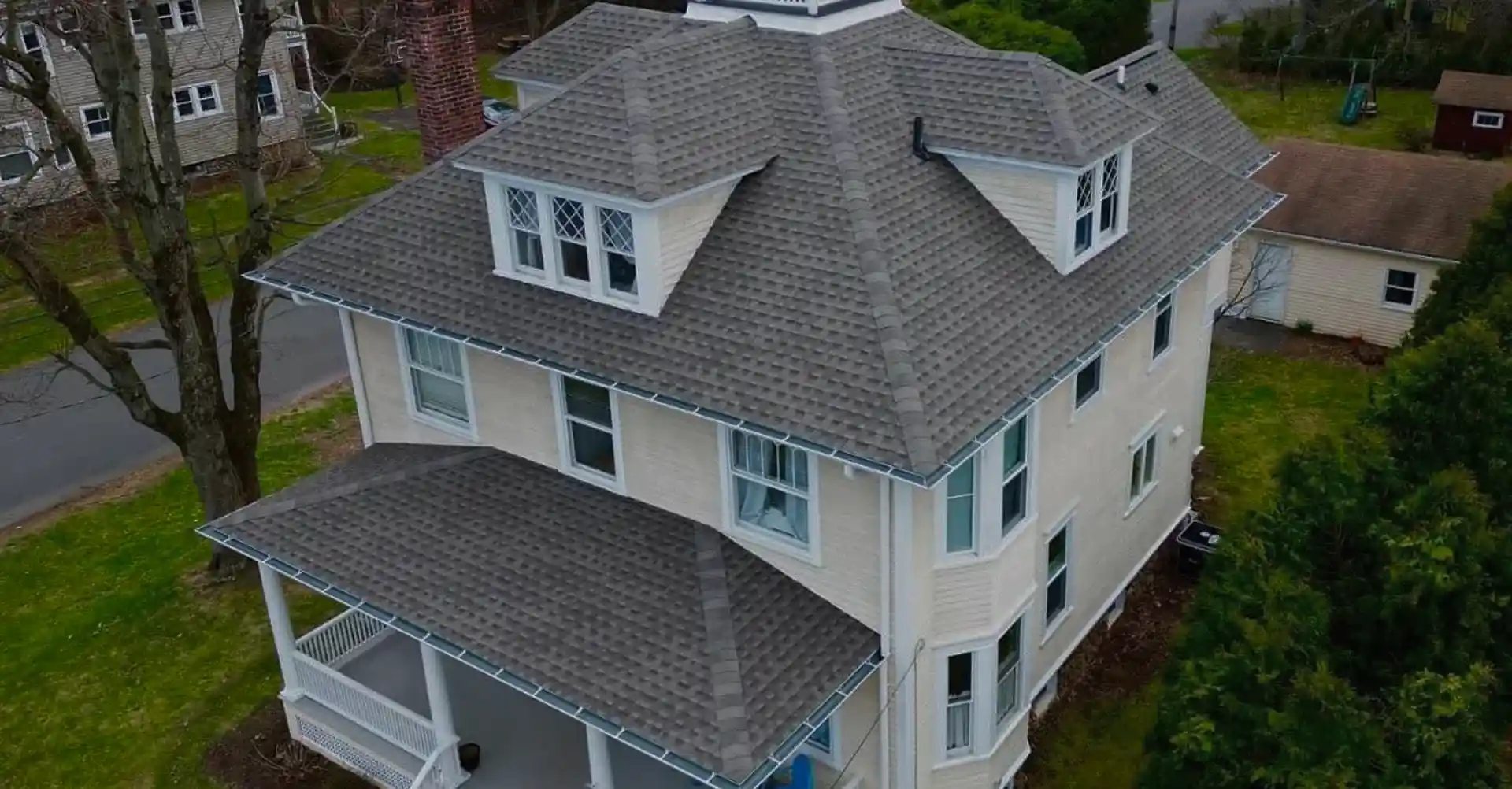
Start by looking at your roof shingles from the ground. You don’t need to climb onto the roof to spot some of the more obvious problems. Look for shingles that are missing, curling at the edges, cracked, or sitting unevenly. Check around the yard for pieces that may have blown off during recent storms.
A few missing shingles may be an easy fix. But if entire sections look worn, brittle, or uneven, you’ll want a roofer to take a closer look. Water can work its way beneath damaged shingles, and once snow starts melting and refreezing, even a small opening can become a problem.
2. Damaged Flashing Around Chimneys, Vents, and Skylights
3. Clogged or Damaged Gutters and Downspouts
Anyone with large trees around their house knows how quickly gutters fill up in the fall. Leaves, pine needles, and small branches can pile up in a matter of weeks.
When gutters are blocked, water spills over the sides instead of flowing through the downspouts. It may also collect behind the gutter and soak into wooden fascia boards.
Before winter, make sure:
- Gutters are free of leaves and other debris.
- Downspouts are connected and draining away from the house.
- Gutters aren’t sagging or pulling away from the roofline.
- Water isn’t collecting near the foundation.
While checking your gutters, take a look at the fascia boards behind them and the soffit panels beneath the roof overhang. Peeling paint, water stains, rotting wood, or loose panels may indicate moisture damage, while gaps in the soffits can allow pests into your attic.
4. Interior Signs of Roof Leaks and Water Damage
Take a few minutes to check the ceilings and walls on your home’s upper floors. Sometimes you’ll notice evidence of a roof leak inside long before the damage becomes visible from outdoors.
Brown or yellow ceiling stains, peeling paint, damp insulation, and musty smells should all be investigated, with special attention given to areas around chimneys, skylights, and attic ceilings.
One thing homeowners don’t always realize is that water can travel quite a distance before showing up inside the house. A stain near a bedroom wall could come from damaged flashing several feet away. Even a small stain that appears after heavy rain deserves attention, especially if it keeps returning.
5. Inadequate Attic Insulation and Ventilation

Without proper airflow in your attic space, moisture will collect beneath the roof. This leaves insulation damp, which can lead to the growth of mold and the deterioration of wood.
If you can safely access your attic, check for:
- Blocked soffit or ridge vents
- Damp, missing, or compressed insulation
- Condensation or frost on the underside of the roof decking
- Dark staining or mold-like growth on rafters and sheathing
In the U.S. Department of Energy’s Insulation Guide, they identify that not every attic is designed for the same type of ventilation. Some homes have vented attic systems, while others have unvented ones. The type of ventilation depends on roof design, climate, and type of insulation.
If you notice moisture or blocked vents, have a roofing professional check the attic before making changes that could interfere with how your roofing system works.
6. Overhanging or Damaged Tree Branches
By late fall, Northeast homeowners have already been through months of thunderstorms, heavy rain, and potentially damaging winds from tropical storms or hurricanes. Before winter arrives, check for branches that may have weakened during earlier storms but haven’t fallen.
A branch that survives a windy September afternoon could break once it’s carrying several inches of wet snow. Falling limbs can damage roof shingles, gutters, skylights, or even the roof decking. Branches that scrape against shingles can also wear away their protective granules.
Walk around your house and look for signs of roof damage after a storm, including dead limbs, branches resting against the roof, or trees that appear damaged. Fall is a good time to arrange trimming before snow and ice arrive. Leave large branches and trees near electrical lines to qualified professionals.
7. Sagging or Uneven Roof Sections
Stand far enough from your house to get a clear view of the roofline. Does it look straight, or do you notice an area that dips or sags? Some older Northeast homes have slightly uneven rooflines that have remained unchanged for years. A newly developing dip, however, shouldn’t be ignored.
Sagging can result from damaged roof decking, weakened framing, long-term moisture exposure, or other structural problems.
The National Weather Service warns that the weight of heavy snow can cause roofs to collapse. A roof that’s already weakened may have trouble supporting additional snow and ice during a major winter storm.
If you notice new sagging or a visibly distorted roofline, have a qualified roofing contractor assess the structure before winter arrives.
8. Areas Vulnerable to Snow and Ice Accumulation
Think back to what your roof looked like during previous winters.
Did thick ice regularly form along the gutters? Were there sections where snow stayed for days while the rest of the roof cleared? Did you notice water stains after a period of melting snow?
Those details can tell you where to pay closer attention this fall.
The National Weather Service explains that melting snow can refreeze at the roof’s edges, creating ice dams that trap water behind them. That trapped water can eventually reach beneath the roof’s shingles and leak into the house.
Catching and repairing minor roof damage that can lead to the formation of ice dams helps save you from more extensive repairs or the need for a premature full roof replacement.
If winter weather brings another round of heavy ice buildup, do not climb onto the roof or try to chip it away with a shovel or sharp tool. You could not only damage the roof shingles, but seriously injure yourself. Work like this is always best left to a specially trained roofing contractor.
Pre-Winter Roof Inspection FAQs
When Should Homeowners In NJ, NY, CT, and PA Schedule a Pre-Winter Roof Inspection?
Homeowners in New Jersey, New York, Connecticut, and Pennsylvania should schedule a pre-winter roof inspection between September and November, preferably before the first hard freeze or snowfall. This gives you time to identify and repair damage while weather conditions are still favorable for roofing work.
If your home experienced summer storms or you’ve noticed missing roof shingles, leaks, or other roofing problems, don’t wait until late fall. Schedule a professional roof inspection with Seci Construction, Inc. to prevent minor damage from becoming a more expensive problem during winter.
How Can I Tell if My Roof Is at Risk for Ice Dams This Winter?
Your roof may be more likely to develop ice dams if you’ve had thick ice along the eaves, uneven snowmelt, or leaks after winter storms. Heat escaping into the attic is a common contributing factor.
A roof inspection will help identify drainage and roofing concerns, while checking the attic’s insulation, air sealing, and ventilation can help explain why ice keeps forming.
Will My Roof Warranty Cover Damage Caused by Snow or Ice?
Most roofing warranties cover specific material defects or installation problems rather than damage caused by winter weather. Whether you’re covered depends on the type of warranty, its terms, and what caused the damage.
Storm-related roof damage may be covered under your homeowners insurance policy instead. Review both your warranty and insurance coverage so you know who is responsible for covering roof repair costs.
Can I Wait Until Spring to Fix a Roof Problem Found During a Fall Roof Inspection?
Some minor roofing issues can wait, but active leaks, missing shingles, damaged flashing, and deteriorating roof decking should be addressed before winter.
A small leak today can become a more expensive roof repair after months of snow and freezing temperatures. If you’re unsure how urgent the problem is, Seci Construction, Inc. can assess the damage and explain which roof repairs should be handled before winter weather arrives.
Why Choose Seci Construction, Inc. for a Pre-Winter Roof Inspection?
Seci Construction, Inc. has served Northeast homeowners for over 50 years and holds roofing credentials that include GAF Master Elite®, GAF President’s Club, Owens Corning Platinum Preferred Contractor, and CertainTeed ShingleMaster™ PREMIER.
Our roofing contractors understand how Northeast winters affect roof shingles, flashing, drainage, and the materials underneath your roof. We’ll explain what we find, whether roof repairs are needed, and when a full roof replacement may be the better option.
Schedule a FREE Roofing Estimate Before Winter Arrives
Seci Construction, Inc. helps homeowners prepare for winter with professional roof inspections, roof repairs, and full roof replacements. Our experienced, licensed, insured, and manufacturer-certified roofing contractors will assess your roof’s condition, identify necessary repairs, and explain your options for protecting your home against snow, ice, and freezing temperatures.
We proudly serve homeowners throughout New Jersey, New York, Connecticut, and Pennsylvania.
Call us at 866-572-7324 or fill out our contact form to schedule your FREE estimate or detailed roof inspection today.